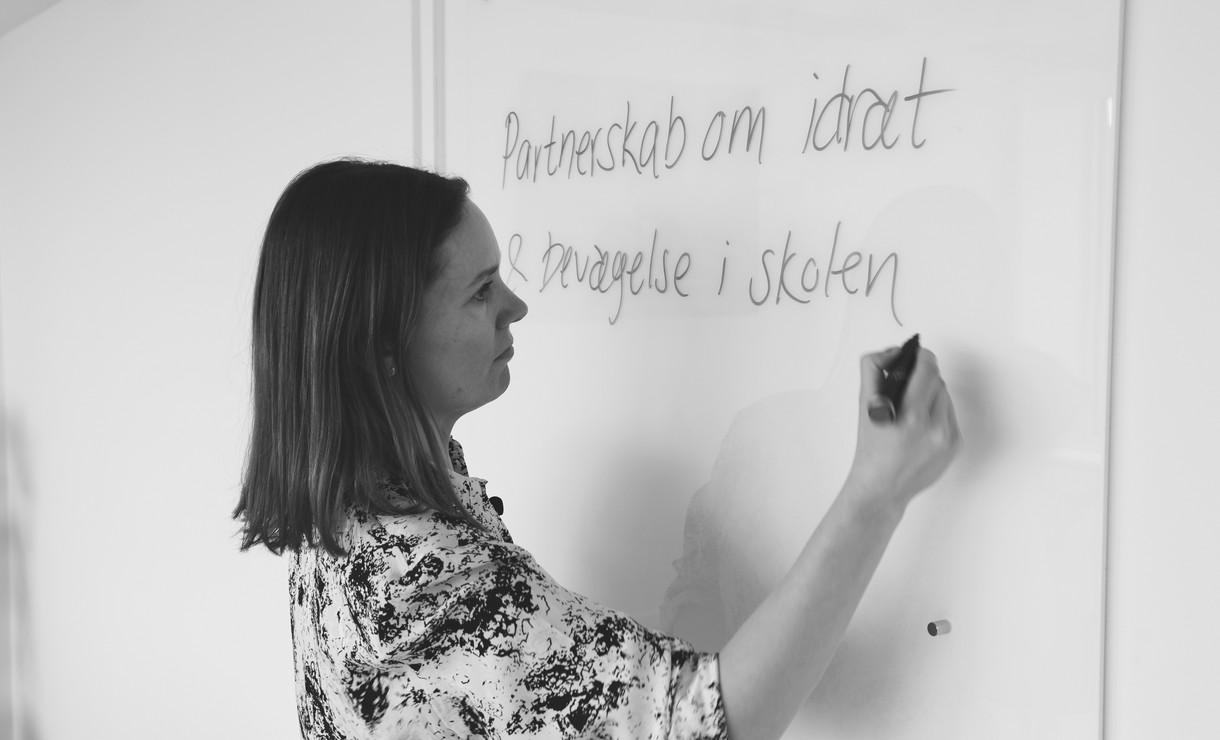
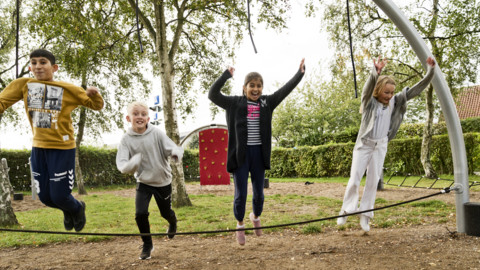
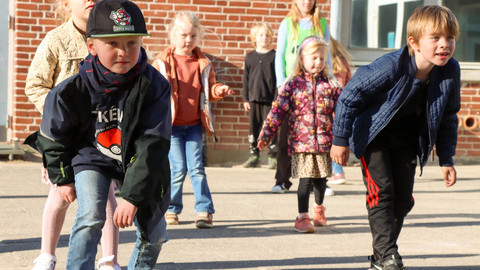
The partnership on sport and physical activity in schools is a collaboration between us and five other organisations, all working to promote pupils’ wellbeing, learning, and health through a stronger focus on sport and physical activity throughout the school day.
The vision is to create an everyday life where all children – regardless of background – have the opportunity to experience the joy of movement and feel its positive effects on both body and mind.
This will be achieved by developing a varied and engaging school day, where physical activity is not an add-on but an integrated part of school culture and practice.
Background
Only 27 percent of Danish schoolchildren meet the recommendations of 60 minutes of daily physical activity, and the proportion drops significantly with age. At the same time, studies show that many children and young people experience poor wellbeing and high levels of school absenteeism.
Physical activity in school has well-documented positive effects: improved concentration and learning, better wellbeing, lower stress levels, and strengthened social cohesion.
In addition, increased physical activity is also likely to have several positive effects on the body, such as a reduced risk of developing overweight, though these are less well documented.
Previous initiatives to promote physical activity have often been short-term, limited to individual arenas such as PE lessons or breaks, and not embedded in school practice. Many schools also face challenges in maintaining physical activity due to time pressure and limited resources.
The political agenda, including the Quality Programme for Primary and Lower Secondary Schools and the recommendations from the The Well-being Commission, now creates momentum for thinking in new and structural ways about movement in schools.
Method and Approach
The partnership is based on a systemic whole-school approach, where the entire school is involved in promoting health, wellbeing, and learning. This means that pupils, teachers, school leaders, parents, and the local community work together to create an environment where movement is integrated into teaching, breaks, transport, and leisure time.
The initiatives are developed collaboratively and adapted to local school contexts.
The goal is to create long-term and sustainable changes in children’s everyday lives.
Press Release
New partnership promotes active schoolchildren | Centre for Childhood Health
In the video below, you can hear our project manager, Ronja Maria Hansen, talk more about the partnership and the link between wellbeing and physical activity.