“Active children are happy children – and happy children learn more”
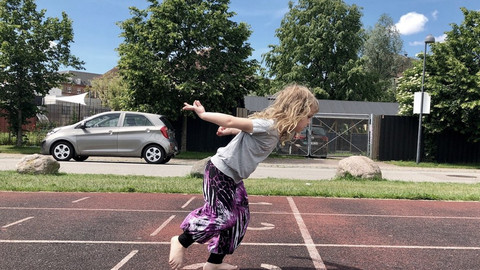
The partnership for Sports ad Physical activity in schools aims to make movement and physical activity an even bigger part of the school day in Danish primary schools.
Several studies show that physical activity during school time improves concentration, learning, and well-being among children and young people.
For a long time, many school researchers and practitioners have wished to integrate more sensory activities, play, and physical movement into the school day and lessons, but implementing it in everyday practice has proven difficult.
Therefore, the organizations behind the new partnership hope that their work will demonstrate how knowledge and ambition can become reality for Danish schoolchildren.
A Complex Field
The partnership works with a so-called whole-school approach, which means considering the school as a fairly complex environment.
When it comes to movement, for example, it also involves students’ transport to school, as well as their lessons, recess, and extracurricular activities. There are many different groups in a school, such as students, teaching assistants, teachers, and parents. Finally, the school is part of a local community, managed by a board, run by a municipality, and subject to national frameworks and legislation.
In practice, this means that school leadership, teachers, parents, and possibly students, municipal authorities, and the local community all need to agree to work together toward a common goal—such as getting children to be more active—if the changes are to take hold and be sustainable over time.
Experiences both in Denmark and abroad show that this approach can be effective when creating sustainable changes within schools.
The task for the partnership is now, together with four pilot schools, to develop a Danish whole-school approach, which can later be applied in interested schools across the country.
Local Solutions
Experiences show, among other things, that it is important for schools to be allowed to use solutions adapted to local conditions.
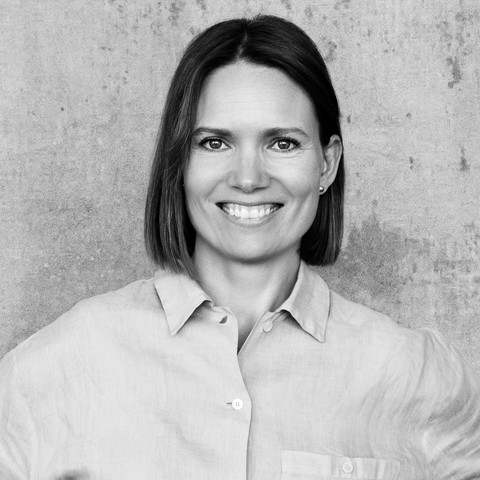
This will also serve as a guiding principle for the partnership’s work, explains Teresa Holmberg, who is Head of the Centre for Childhood Health and one of the initiators of the partnership.
“We want to develop a model that can provide knowledge, ideas, and support for the process. But how it is concretely implemented at a school or in the classroom—so that children become more active—needs to be defined locally,” she says.
“This ensures ownership and also ensures that it builds on initiatives or policies that the school or municipality may already have in place,” adds Teresa Holmberg.
More Than Just Knowledge
Danish School Sport, Denmark (Dansk Skoleidræt) has many years of experience getting Danish children moving during school hours. They helped establish the partnership because they see that there is often a lack of an approach that can make schools’ work on implementing movement and physical activity more sustainable, explains Development Consultant Torben Hansen from Danish School Sport, Denmark (Dansk Skoleidræt).
“It becomes vulnerable if you just send a few teachers on a course or something similar. They might get new tasks, new responsibilities, or not receive sufficient support. Then it all easily falls apart,” he says.
“That’s why we believe a whole-school approach is a better way to achieve the change many schools want,” he adds.
Benefits for Learning and Health
The partnership consists of six organizations that work daily with either school life, physical activity, or health promotion.
- Danish School Sport, Denmark (Dansk Skoleidræt)
- Danish school students
- Danish Union of School Leaders
- Department of Health Promotion, Prevention and Society, Steno Diabetes Center Copenhagen
- Department of Nutrition, Exercise and Sports, University of Copenhagen
- Centre for Childhood Health
They have found a shared mission in promoting movement and physical activity in schools, as research shows that it enhances children’s well-being, learning, and health.
Torben Hansen from Danish School Sports, Denmark (Dansk Skoleidræt) says:
We know that children learn more when more of their senses are engaged. Active children are happy children—and happy children simply learn more.
For Teresa Holmberg, it is also about the fact that more movement and physical activity make a difference for children’s health.
“We also know that active children are healthier and thrive better. So we will closely monitor the initiatives in this area as well,” she says.
- Nyeste offentliggjorte tal (2023) viser, at kun 27 % af danske skolebørn lever op til anbefalingerne om at være fysisk aktiv mindst 60 minutter dagligt ved moderat til høj intensitet. Andelen falder med stigende alder.
- Initiativer med et fokus på øget fysisk aktivitet og bevægelse i skoletiden øger koncentration, læring, trivsel og mental sundhed blandt børn og unge.
- Bevægelse i løbet af skoledagen har positive effekter på elevernes koncentrationsevne, hvilket kan føre til bedre læringsudbytte.
- Regelmæssig fysisk aktivitet i skoletiden bidrager til at reducere stress og angst og kan samtidig styrke sociale relationer gennem samarbejde og fællesskabsfølelse.
- Enkelte nyere studier har vist en gavnlig effekt af ekstra idrætstimer på skolebørns vægt. Fx har Svendborgprojektet vist en positiv effekt af flere år med seks idrætstimer i skoletiden.
A process that takes time
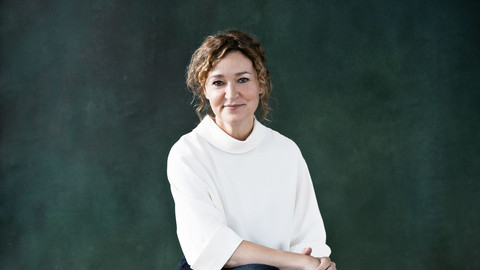
One of the people who will also closely follow the initiatives is Charlotte Demant Klinker. She is Research Director at Steno Diabetes Center Copenhagen, which is also part of the partnership.
She has for many years worked with—and conducted research on—so-called system-oriented prevention. This is an approach where health is strengthened by changing the frameworks and structures that influence our lives (e.g., the content and organization of the school day), rather than focusing on individual activities or the individual child.
“Making a systemic change can be a long process—even at a school. You could say it is only complete when teachers, leaders, and others ‘forget’ that they are in the middle of a change process, and working with physical activity has become a natural part of everyday life. But there is good experience from abroad to build on, so our task in the partnership is now to find the right process for this in Denmark,” she says.
Reducing inequality
For Centre for Childhood Health, which funds the project, primary school is an important arena for promoting children’s health and well-being—not least to reduce the social inequality in health among Danish children.
“In primary school, children from many different social backgrounds, family types, and cultures come together. With this kind of change, we can give them a more equal starting point,” says Teresa Holmberg.
Charlotte Demant Klinker agrees:
Physical activity prevents many health problems and diseases later in life, so early intervention can make a big difference.
However, at some schools, it is not necessarily seen as their task to improve public health or reduce social inequality in health. But it doesn’t have to be, she says:
“The starting point is the school’s purpose. If we can show that schools that succeed in implementing more physical activity have children who thrive better and perform better academically, that will be reason enough for most, and a worthwhile investment. And then health is just a bonus.”
Read here why the Danish School Leaders’ Association is also part of the the partnership for Sports ad Physical activity in Schools.