Partnerskaber

Partnership for Water: Together for Healthy Drinking Habits among Children and Young People

3 out of 4 children and young people in Denmark drink more soda, cordial, and energy drinks than recommended. Half of those aged 13–20 are even heavy consumers, drinking more than two litres per week. 

This was revealed in our study of children and young people’s drinking habits. 

That is why we have taken the initiative to establish a new partnership that aims to make water the natural and easy choice for children and young people. The partnership is also spearheaded by Madkulturen and Steno Diabetes Center Copenhagen.

In total, the partnership consists of nine organisations working together to make cold and fresh drinking water more accessible and attractive in, for example, schools, upper secondary education, youth clubs, and sports facilities. The partnership also seeks to shed light on why many children and young people consume far too much soda and similar drinks on a daily basis — and how this can be avoided. 

“We want to make it easy to do the right thing,” says Jonas Egebart, Chair of the Centre for Childhood Health. “Water should be the easy choice, and we must help influence routines and habits so that it becomes natural for children and young people to reach for water when they are doing sports, at school, or at the dinner table.”

It’s about frameworks and habits

Danes’ consumption of soft drinks more than doubled between 1985 and 2022, according to figures from the DTU National Food Institute. This is one of the trends we aim to curb through the partnership.

The many organisations each contribute with knowledge, networks, and experience. Madkulturen contributes with expertise on how to make healthy choices more attractive for children and young people.

Judith Kyst, Director of Madkulturen, explains:

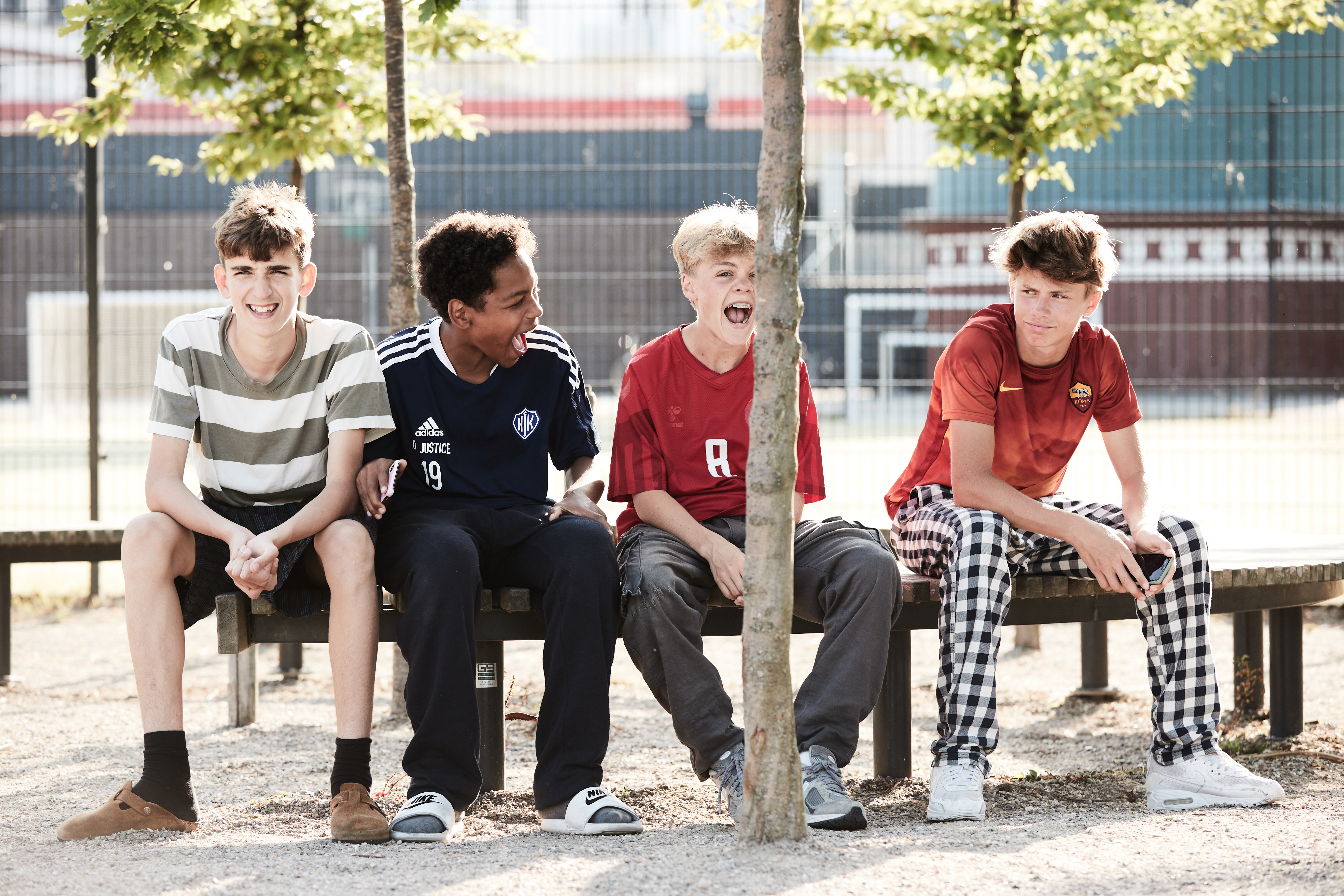
“When children and young people choose sweet drinks, it’s not just about taste – it’s also about habits, social norms, and role models. Drinking habits are shaped in everyday life: in the schoolyard, at youth clubs, and at home,” she says.

“That’s why we use our experience with food culture change to co-create solutions together with children, young people, and the adults around them. We need to make it easy – and cool – to choose water,” she says.
When children and young people choose sweet drinks, it’s not only about taste – it’s also about habits, social norms, and role models.

The Importance of Early Prevention

Steno Diabetes Center Copenhagen sees the partnership as an important contribution to the early prevention of a range of diseases.

“A high intake of sweet drinks increases the risk of overweight and type 2 diabetes. By promoting water as the preferred choice, we can prevent this already from childhood,” says Charlotte Demant Klinker, Head of Research and Senior Researcher at Steno Diabetes Center Copenhagen.

“We therefore see great potential in the partnership to change the systems that shape unhealthy drinking habits. Here, we can contribute with knowledge and experience in developing and evaluating this type of complex initiatives,” she says.

Expanding Nationwide

The partnership has, among other things, gathered knowledge about why Danish children and young people choose the beverages they do, and what experiences parents, schools, and institutions have had when trying to limit consumption.

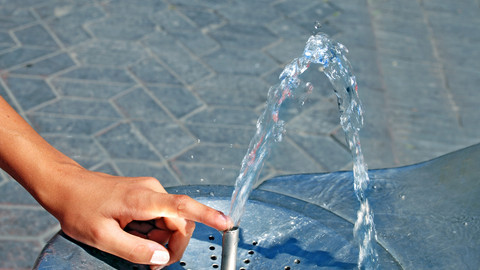
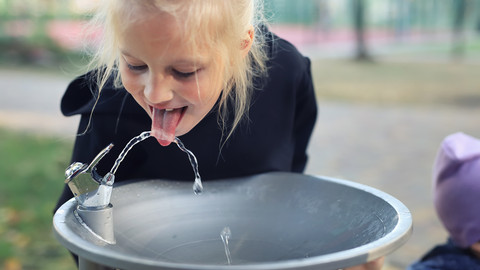
It will now test different initiatives that can nudge children and young people towards the water tap rather than the kiosk. The partnership is therefore in dialogue with five pilot municipalities about installing around 50 water stations in schools, institutions, and sports halls. The aim is to collect knowledge and experiences and then roll this out nationwide.

Over time, the partnership will therefore invite new partners with knowledge and the ability to influence children and young people to join the collaboration. These may come from the school and education sector, municipalities, retail, civil society organisations, NGOs, or elsewhere.