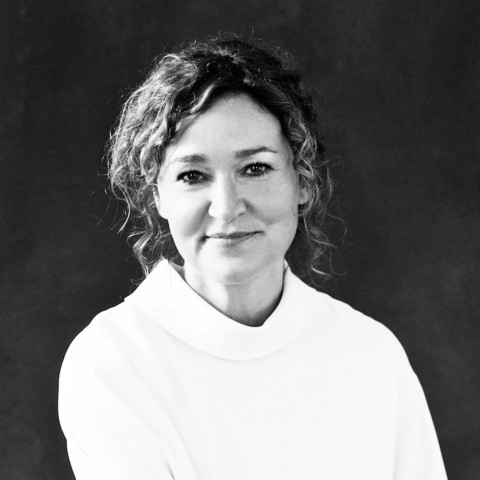
For the past 10 years, Annegrete Juul has educated pedagogues, social workers, teachers, and others as Dean at University College Copenhagen before joining the Centre in November 2025.
How important are professionals to the Centre’s work?
I actually find it hard to see how we could manage without them. In the Centre’s work, we almost always focus on the environments surrounding children’s and young people’s everyday lives. And many of these professions are precisely those environments.
We also know that relationships, communities, and a sense of security are important factors for children’s health and well-being. These are core competencies of the pedagogical professions. That is the work we need to support.
We work with health promotion – why should the pedagogical professions help us with that?
They shouldn’t. It should not become an additional task they are also expected to solve. They already have plenty on their plates. But there are many overlaps between our goals.
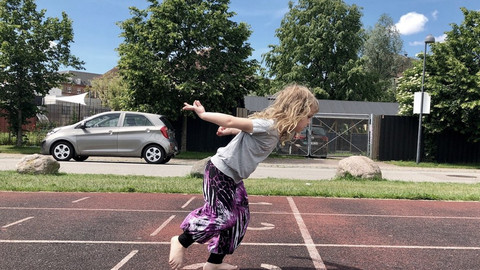
Health and well-being are often mutually reinforcing: children who thrive live healthier lives – and healthy children thrive better. So the two are closely connected. That is why we can provide support in contexts where health, well-being, and didactics or pedagogy strengthen one another. For example, when we see that children in schools that incorporate play and physical activity into teaching often experience greater well-being and also learn more.
In the health sector, we sometimes believe that health is an end in itself. Here, we can learn something from these professions, which view people as whole individuals and where the goal is to create good lives. Health is simply a means to that end.
How do we build stronger collaboration with professionals?
We need to show that we are on the children’s side. In a shifting political agenda that is quickly taken over by issues like weapons and warfare or something else, our sole focus is on children and young people.
We also need to show that, for us, health is not about wagging fingers. It is about recognising that children do not choose the bodies they are born with, the conditions they grow up in, or the frameworks society sets for their health.
And we must act as a counterweight to the questionable trends that both professionals and children encounter on social media. When it comes to health, body image, well-being, weight stigma, and much more, we are the voice of reason.