DKK 55 million for local healthcare initiatives – aiming to inspire the rest of the country
What do safe cycling routes to school and leisure activities, welcoming hangout spaces for young people, packed-lunch workshops and more after-school jobs have in common?
These are all initiatives designed to improve the health and well-being of children and young people in the Municipality of Ishøj through an innovative partnership between the municipality and the Centre for Childhood Health.
The partnership aims to bring together stakeholders across Ishøj Municipality’s departments, civil society and local associations, while actively involving residents. One of its objectives is to promote healthy weight development among children and young people.
With a grant of DKK 55 million, this will be the Centre’s largest investment to date.
Lessons Learned Can Be Applied in Other Municipalities
Neither poor well-being nor overweight among children and young people is unique to the Municipality of Ishøj. These are national challenges, emphasises Jonas Egebart, Director General of the Danish Health Authority and Chair of the Centre’s Board. He says:
“This is an ambitious initiative that seeks to address the challenges facing the entire country in a new way. I believe that the cross-sectoral local focus and the ongoing use of data will be key elements in the future of preventive health efforts. There is therefore good reason to keep an eye on developments in Ishøj in the coming period.”
Local Solutions
In the Municipality of Ishøj, Mayor Merete Amdisen (Social Democrats) welcomes the partnership.
“Our children and young people face the same challenges as those elsewhere in the country. But we need to find our own way of addressing them. Ishøj has many strengths we can build on: skilled municipal professionals, a strong and committed network of local associations, and wonderful natural surroundings close to the town. All these strengths now need to work together towards a common goal.”
Children are influenced by many different factors.
The initiative will also seek to demonstrate why it is important to focus on the environments and conditions in which children and young people grow up, rather than on individual children. This is according to Annegrete Juul, Director of the Centre for Childhood Health:
“Children and young people are influenced by many different factors – their families, institutions, surroundings, culture, advertising, the media and so on. That is why preventive efforts must also take place on many different fronts – for example, in schools, nurseries, housing associations, leisure activities and within the family,” says Annegrete Juul.
“Children and young people are influenced by many different factors – their families, institutions, environment, culture, advertising, the media and so on. That is why preventive efforts must also take place on multiple fronts – for example, in schools, kindergartens, housing associations, leisure activities and within the family,” says Annegrete Juul.
Movement, Enjoyment of Food and a Sense of Belonging
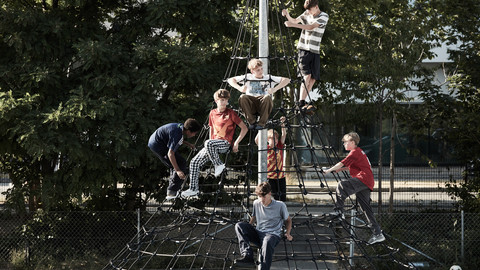
The initiative will focus on getting more children and young people involved in communities that encourage play and physical activity, as well as communities that promote healthy eating habits. It will also aim to ensure that more young people feel a sense of belonging and have a say in shaping their everyday lives, their local communities and their future.
A wide range of proposals are already being developed to make this happen. These include:
- New types of parenting programmes focusing on motor skills, language and culture.
- More spaces where children, young people and families can take part in activities and social communities.
- Family courses, cooking activities and communal meals.
- More opportunities for young people to attend youth clubs and take on part-time jobs.
Many more initiatives will be developed over the next four years in collaboration with local stakeholders.
- The funding has been allocated for the period 2026–2030, with a preparatory phase running from 2024 to 2026.
- The Centre for Childhood Health will use the initiative to generate knowledge about how so-called systems approaches and community-based initiatives can be applied to promote health.
- The initiative is therefore being monitored by researchers from the University of Southern Denmark, the Capital Region of Denmark and Copenhagen Business School.
- This is the first time in Denmark that a concerted effort has been made to drive systemic change across an entire municipality on this scale.
- The partnership builds on experience and research from countries including the Netherlands, England, the United States and Australia, where similar initiatives have demonstrated positive results.
The Municipality of Ishøj is located in the western suburbs of Copenhagen. With just under 25,000 residents spread across 26.5 km², it is one of Denmark’s smallest municipalities in terms of area. It is characterised by a diverse population and strong local communities.
Ishøj Municipal Council has chosen to make a long-term commitment to investing in the health and well-being of children and young people through its Vision 2035 – Working Together for an Ishøj of Opportunities, as well as a number of ambitious strategies focusing on children and young people.
Hear Project Director Tine Curtis talk about the partnership with the Municipality of Ishøj and the plans for the new funding. (The video is only available in Danish.)
We need your consent
You need to accept functional cookies to watch Vimeo videos